
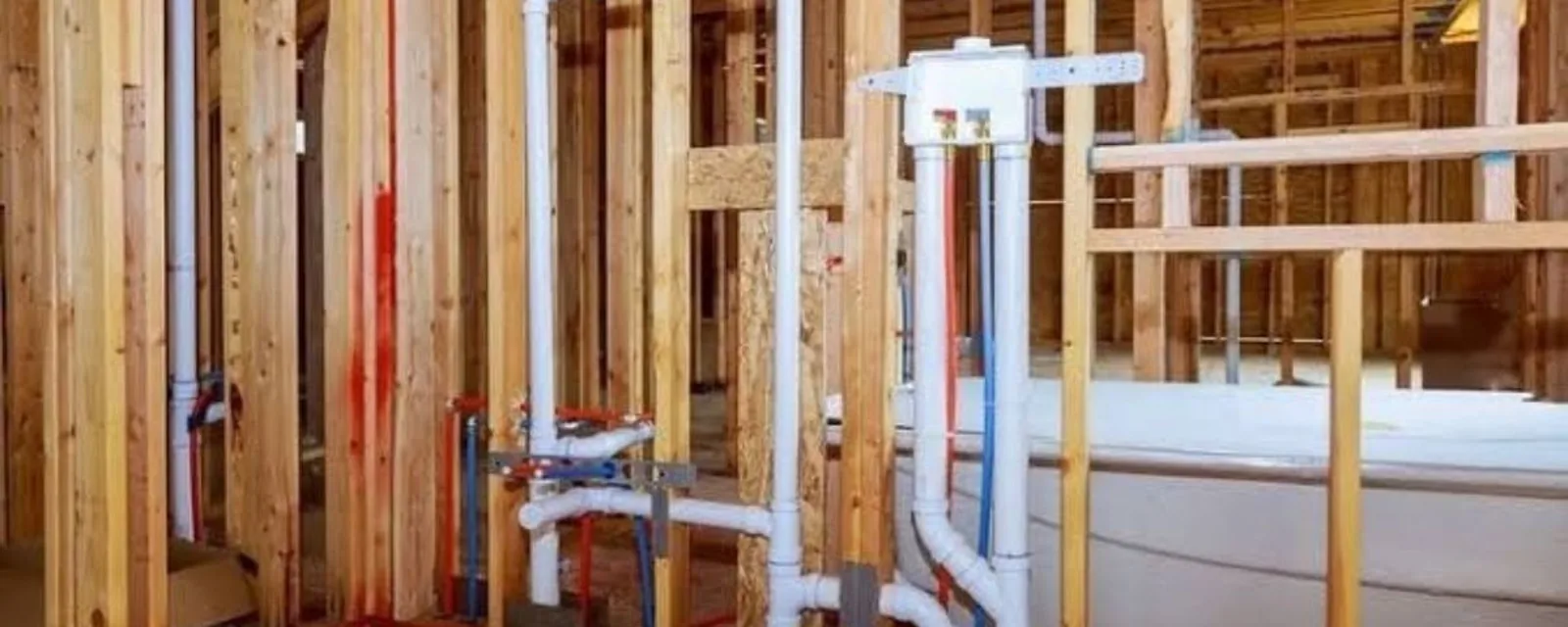
Plumbing installation covers putting new fixtures and piping into a home: sinks, toilets, tubs, showers, a kitchen with a disposal and dishwasher, or an entire bathroom added where none existed. The work splits into rough-in, which is the piping inside walls and floors, and finish, which is setting the fixtures and testing them. Our licensed plumbers do both in Neptune.
Good installation depends on decisions made before anyone opens a wall: where the drain slopes, which pipe material fits, and which inspections apply. This page walks through those choices.
Fixtures we set, and what each one needs
Each fixture has its own connection points and clearances.
Kitchen and bath sinks
Faucet, supply lines, shutoff valves and a P-trap connected to the wall drain.
Toilets
A flange at the right height, a wax ring, closet bolts and a supply line with its own shutoff.
Tubs and showers
A valve in the wall, a drain with a trap, and a spout or showerhead on the right rough-in height.
Laundry and utility sinks
Standpipe or sink drain, hot and cold supply, and often a washer box.
Outdoor hose bibs
A frost-resistant spigot with a vacuum breaker, set with a slight pitch to drain.
Setting a toilet: flange, wax ring and closet bolts
Toilet installation is a good example of why small details matter. We cover removing a failed toilet in more depth on our toilet repair page.
Check the flange
It should sit level and firm on the finished floor. A cracked or low flange needs a repair ring before anything else.
Place closet bolts
The bolts slot into the flange and hold the bowl in position.
Set the wax ring and bowl
The bowl goes straight down onto the ring without twisting, then shims fill any gap on an uneven floor.
Tighten and caulk
Nuts go down in small turns to avoid cracking the porcelain, then the base is sealed as the local inspector or manufacturer prefers.
Connect and test
We attach the tank, the supply line and the shutoff, then flush repeatedly and watch the base for seepage.
PEX, copper, CPVC, PVC and cast iron: honest trade-offs
Each material has a place. No single one wins everywhere.
| Material | Best for | Trade-off |
|---|---|---|
| PEX | Supply lines in walls and floors | Not for sun exposure, needs correct fittings. |
| Copper | Supply lines where durability matters | Higher material cost, skilled soldering. |
| CPVC | Hot and cold supply in some codes | Brittle with age, sensitive to heat. |
| PVC | Drain, waste and vent | Not for hot water or supply use. |
| Cast iron | Quiet drain stacks, older homes | Heavy, costly, corrodes over decades. |
The code decides what is allowed in a given location. New Jersey's plumbing subcode is the National Standard Plumbing Code, and we pick materials that comply.
Need a fixture fixed first?
A leaking faucet may only need a cartridge, not a new fixture.
Double kitchen sink, disposal and dishwasher
A double sink with a disposal shares one drain arrangement. Both bowls feed a common trap, the disposal attaches to one drain outlet, and the dishwasher hose connects to the disposal inlet or an air-gap fitting. The knockout plug inside a new disposal must be removed before the dishwasher hose is connected, or the dishwasher will not drain.
If you are adding a disposal to an existing sink, we check the trap layout and sink drain size first. For disposal problems after installation, see garbage disposal repair.
Adding a bathroom: rough-in and finish stages
A new bathroom needs a drain that slopes toward the stack, a vent so traps hold water, and hot and cold supply lines. Placing the new bathroom near an existing stack saves a lot of piping, and we look at the layout with you before you buy fixtures.
Rough-in happens before walls close. Finish happens after drywall and tile. Plan fixture choices before rough-in, since the rough-in heights depend on the specific model you buy.
Permits, fees and inspection stages
Permit rules vary, so ask the Neptune Township construction office what your project needs. The township's 2018 fee schedule lists $27 per plumbing fixture or device and a $95 minimum per subcode. Confirm current fees with the office, because the schedule may have changed.
For one and two family dwellings, the township lists rough plumbing, finish plumbing and final plumbing inspections. Rough plumbing is done before piping is covered. Inspections must be requested at least 24 hours ahead, and the township performs them within three business days of the requested time. In Belmar, the Construction Department can fine unpermitted work $500 to $2,000, so ask first.
Water quality, flood zones and floodplain permits
New Jersey American Water reports naturally occurring hardness of 72 to 140 ppm in its Coastal North system. Hard water leaves scale on faucet aerators and showerheads, so choose fixtures with removable aerators and accessible cartridges.
Large parts of Neptune's residential areas, including all of North Island, are in mapped flood zones. The township requires a Floodplain Development Permit before construction or development begins. If your project is in a flood zone, ask the office about that permit before ordering anything.
Every fixture deserves its own shutoff valve
A shutoff valve under each sink and behind each toilet lets you stop a leak in seconds without closing the whole house. We install quarter-turn valves and braided or solid supply lines at every fixture we set. Check the ones you already have, since old valves seize if they are never used.
Get the room ready
A little preparation shortens the visit.
- Choose your fixtures before rough-in, and keep the spec sheets for us.
- Clear cabinets and the floor around each fixture.
- Tell us where the main shutoff is, or point us to it.
- Decide whether you need a permit conversation with the township first.
- For a bathroom addition, note the nearest stack and any wall you cannot open.
- If you rent, get written approval from the landlord before changes.
What drives the cost of an installation
Fixture jobs range from a quick swap to a full bathroom, so the number depends on scope. For the installation of a new heater, see water heater installation.
New installations are planned projects and rarely an insurance matter. If a remodel follows a covered loss, we can provide an itemized invoice for your adjuster.
Plumbing Installation questions in Neptune, NJ
Yes. We check the flange height and condition, set a new wax ring and closet bolts, shim if the floor is uneven, and test the flush and the base for leaks. If the flange is damaged, we repair it first.
Yes, subject to layout and permit rules. We look at the nearest drain stack, venting and supply lines, give a clear price before work starts, and explain the rough and finish inspections.
The township's 2018 fee schedule lists $27 per plumbing fixture or device and a $95 minimum per subcode. Permit rules vary, so ask the Neptune Township construction office, and confirm current fees with them.
Permit rules vary, so ask the Neptune Township construction office. A like-for-like swap and a new fixture location are not always treated the same way. We help you ask the right question.
It depends on the use. PEX is flexible and quick for supply lines. Copper is durable but costs more. PVC is the standard for drains. Cast iron is quiet but heavy. We choose materials that meet the National Standard Plumbing Code and fit your layout.
Yes. We coordinate access with tenants or a property manager, provide itemized invoices, and keep permit and inspection records for your file. Get your own lease terms in order before changes.
Yes. We connect the dishwasher hose to the disposal or an air gap, remove the knockout plug in a new disposal, and test the drain. If the sink is double, we check the shared trap arrangement.
Related plumbing services
Sources referenced on this page: New Jersey Department of Community Affairs, plumbing subcode (N.J.A.C. 5:23-3.15), National Standard Plumbing Code. New Jersey American Water, Coastal North annual water quality report. Neptune Township construction office, 2018 fee schedule (Ordinance 18-25).