
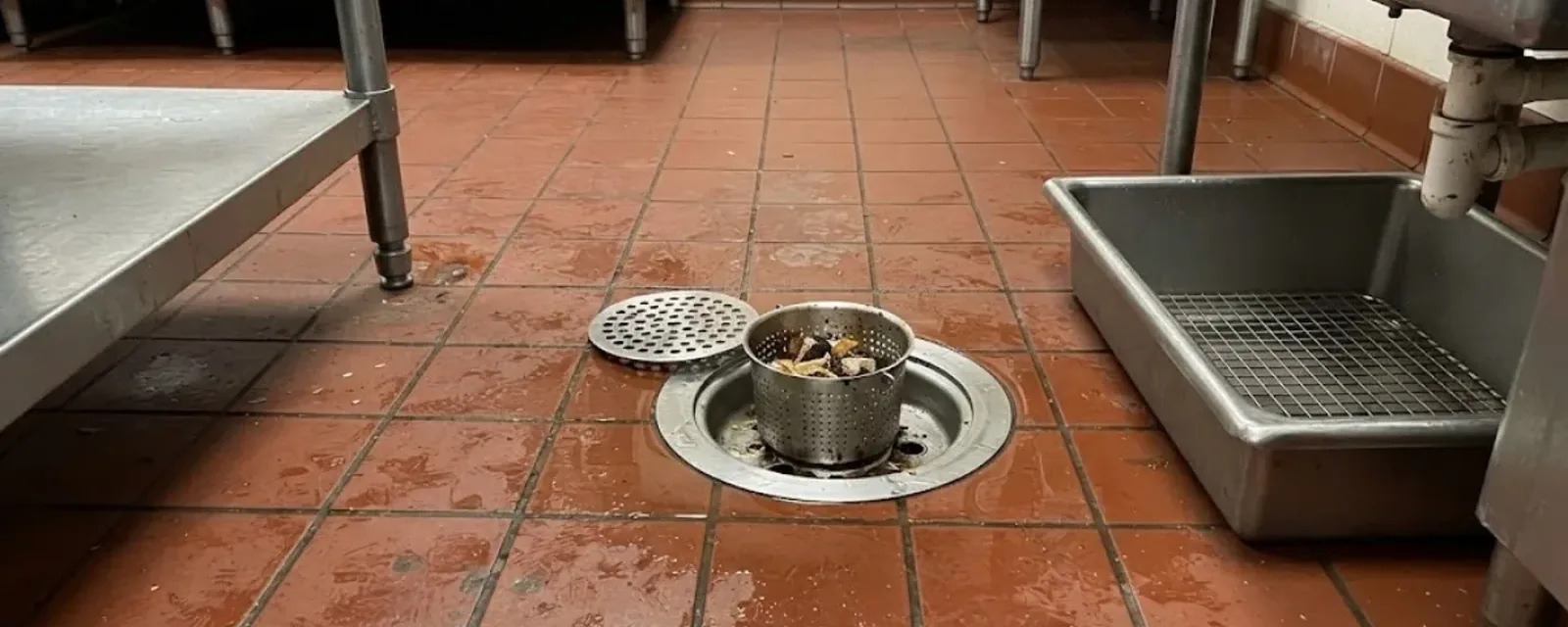
Commercial plumbing covers the water, drain, sewer and hot water systems of a business, from a restaurant kitchen or a retail strip to an office suite or a seasonal boardwalk shop. A plumbing failure there costs sales as well as repairs. If sewage is backing up, water is spreading or a line has burst, shut the main valve, stop using fixtures and call the 24/7 emergency line at (732) 466-1098.
Business plumbing differs from residential work in volume, schedules and who is responsible. Larger drains, grease, shared lines, tenant leases and inspection rules all play a part. This page explains how those pieces fit together and what we need from you to plan a visit.
Sewage on the floor or a main line down during business hours?
Close the main water valve if water is spreading. If sewage is rising from floor drains or toilets, stop using sinks, toilets and dishwashers, and keep customers and staff away from the wet area. Do not touch wet electrical equipment or the panel in standing water. If you smell gas, leave the building and call the gas utility or 911 before you call a plumber.
Call (732) 466-1098 and tell us the address, what is overflowing and whether the property manager has been told. After hours, the township says to call the police department for after-hours sewer emergencies on the municipal system. We handle the plumbing side on the private side of the connection.
Common commercial plumbing calls
Business calls tend to cluster around a few failures. Here is what we see and what each one usually involves.
| Setting | Common problem | Usual cause | Business impact |
|---|---|---|---|
| Restaurant | Kitchen drain backs up | Grease and food solids in the line | Closed kitchen, health risk. |
| Office suite | Restroom stall overflows | Wipes, paper towels in the toilet | Shared restroom out of service. |
| Retail unit | Water stains in ceiling | Leak from the unit above or a supply line | Damaged stock, closed area. |
| Medical-adjacent office | No hot water in sinks | Failed heater or mixing valve | Hand-wash stations unusable. |
| Seasonal shop | Low pressure at opening | Winter shutdown damage or a closed valve | Delayed opening day. |
| Mixed-use building | Shared stack backs up | Blocked main drain | Several tenants affected. |
A clear description over the phone saves time. Tell us the floor, the fixture, and whether other units are affected.
Restaurants and food service: grease, floor drains and disposals
Kitchens put heavy demands on drains, and most problems start with fat that cools and sticks.
Grease buildup
Fat hardens on pipe walls and narrows them until water slows. Regular cleaning keeps it from becoming a blockage.
Grease trap or interceptor
The trap catches grease before it enters the sewer. It needs scheduled pumping and cleaning, and a full one passes grease downstream.
Floor drains
A floor drain that gurgles or smells has a blocked line or a dry trap, so pouring water into it is the first check.
Disposals
A commercial disposal jams on bones and starch. Running cold water and keeping fat out helps.
Dish and prep sinks
Heavy use loosens fittings and wears supply lines, so small drips deserve attention.
Kitchen lines backing up?
Ask about scheduled jetting for grease-heavy drains.
Who pays: landlord or tenant?
The lease decides, not the plumbing. Many leases make the landlord responsible for the building's mains, risers and shared drains, and the tenant for fixtures, sink traps and anything inside the unit. A few shift more to the tenant. Read the clause before you call.
If the cause is not clear, call us first and tell the property manager at once. We write up where the failure was found on an itemized invoice, which helps sort out responsibility. Photograph the area and keep the leak or backup record for your insurer.
The roads, the buildings and what they mean for plumbing
Neptune's commercial strip runs along Route 66, with Routes 35 and 18 and the Garden State Parkway exits nearby. Shops, offices and medical-adjacent suites near Jersey Shore University Medical Center, a 691-bed level II trauma center, sit in this mix. We do not serve the hospital itself, but nearby clinics and offices have similar needs, such as reliable hot water and quiet scheduling.
In Asbury Park, redevelopment has added condos and hotel conversions to the Victorian-era buildings and boardwalk businesses. Older buildings often have mixed pipe materials and shared drains, so confirm what is behind walls before a renovation. See plumbing help in Asbury Park for more.
Opening and closing a seasonal shore business
Many shore businesses run seasonally. Nearby Belmar had 29.5% of its housing units vacant and Bradley Beach 33.0% in the 2020 figures, which shows how much of this coast sleeps in the off-season.
- At closing, shut the main valve and drain supply lines, the water heater and any outdoor spigots.
- Pour plumbing-safe antifreeze into traps where the building will be unheated.
- At opening, open valves slowly and check every fixture and exposed joint for leaks.
- Flush each line and run hot water to confirm the heater fires and holds temperature.
- Test floor drains and the grease trap before the first service day.
- Schedule backflow testing before inspection deadlines, not on opening week.
A short pre-season walk-through catches freeze damage while there is still time to fix it.
Backflow prevention, testing and hot water sizing
Backflow preventers keep dirty water from flowing back into the public supply. Many commercial properties are required to have them tested on a recurring basis. The water supplier and local officials set what applies, so ask which rules cover your building before the next test is due.
Commercial hot water is sized to peak use, not daily average. A restaurant with dishwashing and a salon with several chairs need more recovery than a small office. If the heater is undersized, staff run out in the rush. Replacement options are covered under water heater replacement, and the NJ plumbing subcode defines hot water as 120 to 140 degrees F.
Scheduling work around your business and your property manager
For non-emergency work, a little planning avoids lost sales and tenant complaints.
Tell us the contact chain
Give us the manager's name, the on-site contact and anyone who controls building access.
Choose the window
Many jobs fit before opening or after closing. We confirm which shutoffs affect neighbors.
Get approval for shared systems
Work on risers, shared drains or the main usually needs the owner's sign-off.
Notify tenants
Written notice of water shutoffs prevents surprise outages.
Close out with paperwork
You receive an itemized invoice with the cause and fix for your records.
Permits and inspections for commercial work
Permit rules vary, so ask the Neptune Township construction office what applies to your job. The township's 2018 fee schedule lists $27 per plumbing fixture or device including water heaters up to 99 gallons, $65 for a water heater of 100 gallons and up, and a $95 minimum per subcode. Confirm current fees with the office.
Plumbing work is governed by the National Standard Plumbing Code, NJ edition. The township's inspection stages, including rough and final, are requested at least 24 hours ahead. Belmar's Construction Department fines unpermitted work between $500 and $2,000, so check your town's rules before starting.
What drives commercial plumbing costs
Business jobs vary more than home jobs, so a quote has to account for the building. These factors matter most.
Business property and liability policies vary widely on water damage. Ask your insurer and landlord what is covered, and keep every invoice.
Commercial Plumbing questions in Neptune, NJ
Yes. The 24/7 emergency line at (732) 466-1098 is open around the clock, including nights and weekends. Give us the address, what is overflowing and whether you can reach the main valve.
While you wait, shut the main water valve if water is spreading, stop using the affected fixtures and keep staff away from wet electrical areas. We do not promise an arrival time, but we tell you what to do next.
The building address, a contact on site, access instructions, which units are affected and the lease responsibility if known. Photos help. For shared systems, written authorization speeds the work.
Stop pouring grease and food solids down the line, check the trap or interceptor, and schedule cleaning. Recurring backups often need a scheduled jetting plan. See sewer line cleaning for the main building line.
Backflow testing rules are set by the water supplier and local officials, so ask which apply to you. We can inspect the device, repair it if it leaks and advise on next steps. Confirm requirements before scheduling.
Permit rules vary, so ask the Neptune Township construction office. The township's 2018 fee schedule lists $27 per fixture or device, $65 for water heaters of 100 gallons and up, and a $95 minimum per subcode. Confirm current fees.
Your lease governs. Fixtures inside the unit are often the tenant's, while mains and shared lines belong to the landlord. Report the problem in writing, and we provide an itemized invoice that states the cause.
Often, yes. Many repairs can be done before opening or after closing. Tell us your hours and who needs to approve access, and we plan the visit around them.
Related plumbing services
Sources referenced on this page: New Jersey Department of Community Affairs, plumbing subcode (N.J.A.C. 5:23-3.15), National Standard Plumbing Code. Neptune Township construction office, 2018 fee schedule (Ordinance 18-25).