
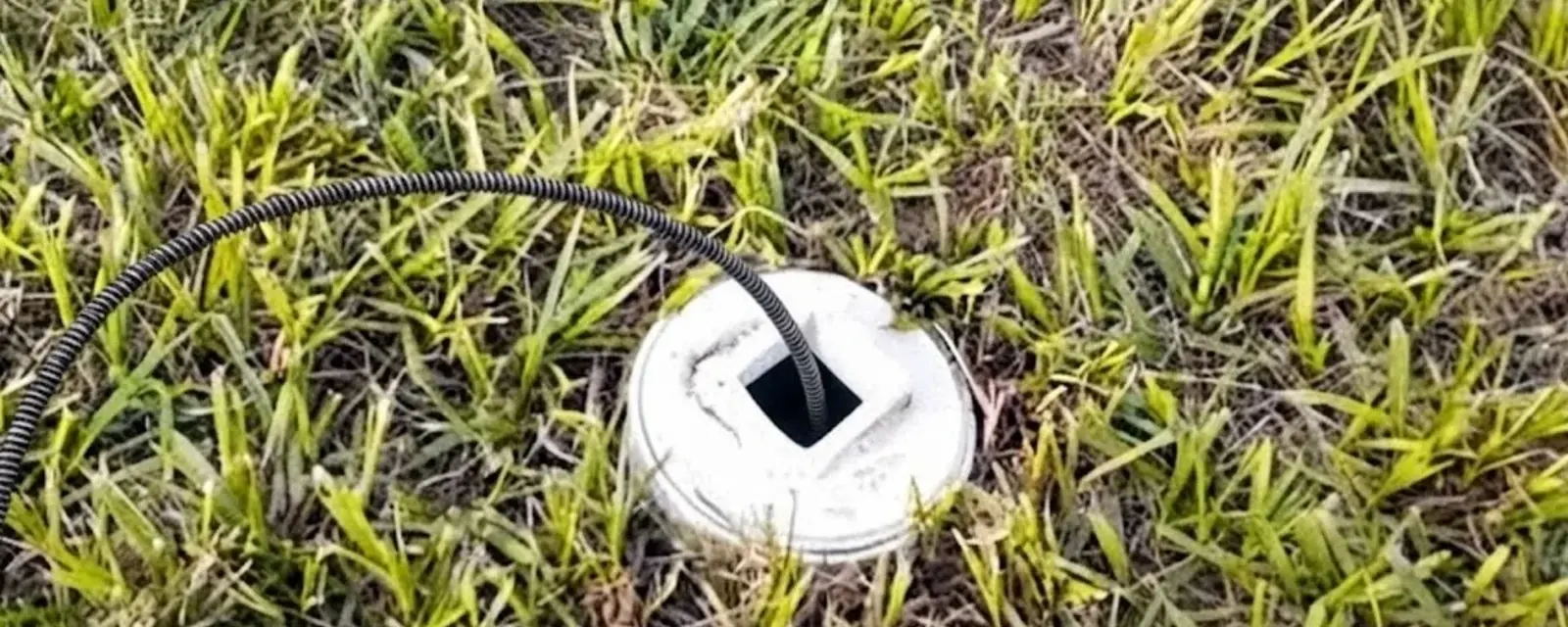
Sewer line cleaning clears the main drain that carries every fixture in your house out to the street or septic connection. When this one pipe clogs, nothing downstream works, and the lowest drain in the house, often in the basement, is where the water appears first. If that is happening in your Neptune home now, call our 24/7 emergency line at (732) 466-1098.
We open the main sewer cleanout, run a drain machine sized for your pipe, and check that water flows freely before we leave. The price is clear before work starts.
Sewer smell indoors or a floor drain gurgling?
A sewer odor in the basement, bubbles in a floor drain or a toilet that rises when the washer drains are early signs that the main line is restricted. Sewer gas smell can also come from a dry trap, which is an easy fix, so we start by pouring water into the drain and watching what follows.
If the smell stays after the trap refills, or water moves slowly everywhere at once, the blockage is in the main. That is a job for a cleanout and a machine, not for a plunger, and a single stubborn fixture is a drain cleaning call instead.
Wastewater rising from a basement drain right now?
Call (732) 466-1098 and stop all water use in the house at once. Move belongings off the floor if you can do it from dry ground. Keep children and pets away, since backup water carries waste.
Stay out of wet electrical areas and do not touch the panel if it sits in standing water. Photograph the flooding before cleanup for your insurer or landlord.
If the whole street is backing up, the problem may be the municipal main rather than your pipe. The township says after-hours sewer emergencies go through the police department. Do the same, then call us for what is inside your property line.
Finding your main sewer cleanout
A cleanout is a capped pipe that gives a machine direct access. Check these places before we arrive.
- Basement or crawl space, near where the main drain leaves the foundation wall.
- A threaded cap in the floor near the water heater or laundry.
- Outside the house, along the foundation, often a short pipe with a screw-in cap.
- Front yard or driveway edge, sometimes under a small round lid.
- Garage floor, if the house was built over a slab.
If you cannot find one, do not dig. We can pull a toilet to reach the line, though a cleanout installed afterward makes every future cleaning faster.
Roots keep coming back?
A camera inspection shows where roots enter so you can fix the source.
Machine heads and what each one is for
The cable stays the same. The head on the end of it changes with the blockage.
| Cutter head | Cuts through | Pipe it suits | Caution |
|---|---|---|---|
| Spearhead | Soft clogs and paper | Any size | Does not clear the wall. |
| Spiral blade | Roots and thick sludge | 3 to 4 inch lines | Can snag in cracked pipe. |
| Chain cutter | Dense root mass | 4 inch and larger | Scratches thin or old pipe. |
| Retrieving head | Rags, toys, wipes | Lines with a snag | Needs camera guidance. |
| Descaler blade | Mineral and scale | Cast iron and old steel | Skip on brittle pipe. |
Why roots return, and what to do about it
Roots follow moisture. A joint that leaks even slightly releases warm, nutrient-rich vapor, and fine roots enter and thicken. A machine clears them, but unless the joint is sealed or the pipe lined, the roots grow back, usually over months to a few years depending on the tree and soil.
A camera inspection after cleaning shows where the roots enter. If the joint is cracked or offset, a repair is the real fix. If the pipe is sound, periodic cleaning is a practical plan. For heavy buildup that a cutter head cannot fully remove, hydro jetting scours the wall.
Flood zones, pump stations and backflow in Neptune
Superstorm Sandy damaged three township pump stations, North Island, South Island and North Riverside, and the state recovery report warned of raw sewage backing into flooded streets while they were down. The stations were then made watertight, with electronics raised above the 500-year flood elevation. Large parts of the township's residential areas, including all of North Island, sit in flood zones marked AE, AO, VE or X on the township maps.
In a flood zone, a floor drain that backs up during a storm may be a municipal capacity problem rather than a blockage in your own pipe. We can tell the difference by running the line when the weather is dry.
If your basement floods with sewage in a storm, ask about a backwater valve, which closes the line when flow reverses. If you live in Neptune City, ask the borough who runs your sewer system, since the provider differs from the township's.
Who maintains which part of the sewer
Neptune Township has a Sewer Maintenance Department, and Ocean Grove has its own Ocean Grove Sewerage Authority. The part of the pipe that runs from your house to the connection is typically yours, while the main in the street belongs to the utility or township. Where that line falls depends on your address, so ask the township or authority before you assume.
Cleaning your own line is routine maintenance. Replacing or rebuilding it is a different matter, and permit rules vary, so ask the Neptune Township construction office. If a clog keeps coming back after cleaning, see our sewer line repair page.
How often to clean: general guidance
There is no fixed schedule that suits every house. A line with trees nearby, a history of backups or heavy grease use benefits from regular cleaning. A clean line with no history may need none. After any root cleaning, a camera check tells you how long the pipe stays clear and helps you plan.
What shapes the price of a main line cleaning
Every house differs, so we give a clear price before work starts. These are the pieces behind it.
Insurance may cover resulting water damage after a sudden backup but often does not cover cleaning the line, so check your policy.
Sewer Line Cleaning questions in Neptune, NJ
Yes. The 24/7 emergency line is open around the clock, so call (732) 466-1098 at any hour. We ask what is backing up and whether water is near electrical equipment.
While you wait, stop all water use, keep people out of the area and photograph any damage. We do not promise a fixed arrival time.
A smell that appears after a long absence is often a dry floor drain trap, which refills with a pitcher of water. A smell that persists means gas is escaping from a vent, a cracked pipe or a partial blockage, and a camera look settles which.
Heavy rain can strain a sewer system, and water searches for the lowest exit, which is the floor drain. If it only happens in storms, the cause may be outside your property, and a backwater valve is worth discussing.
If only your house is affected, the blockage is usually in your pipe. If neighbors are backing up too, the street main may be at fault. Call the township's after-hours route through the police department for street problems and us for your side.
Cleaning is routine maintenance. Replacing or digging the line is different, and permit rules vary, so ask the Neptune Township construction office.
The landlord or property manager usually owns the main line, so notify them in writing and take photos. We can send a written description of the cause for your records.
Related plumbing services
Sources referenced on this page: NJ Department of Community Affairs, Strategic Recovery Planning Report on Neptune Township (2014). Township of Ocean Sewerage Authority and Ocean Grove Sewerage Authority public information.