
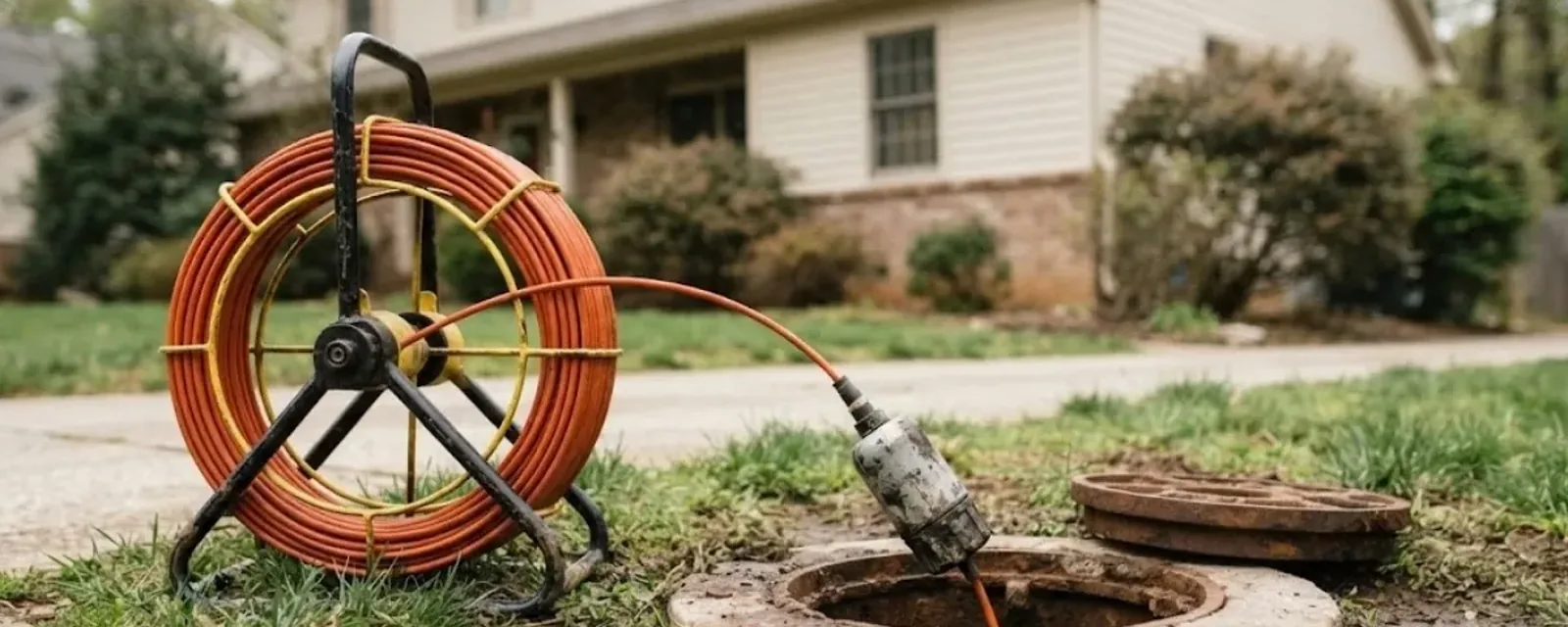
A sewer inspection is a video look inside the line that carries wastewater away from your house. A camera on a flexible cable travels from the cleanout toward the street, recording cracks, offsets, roots, low spots and buildup that no one can see from above ground. Homeowners in Neptune book one before buying, after repeat backups, or before spending on repairs.
We show you the footage as it plays, point out what each defect means, and give a written note of what we found. The price is clear before the camera goes in.
What the camera shows
Belly
A sag that holds standing water and waste, which causes repeat clogs even in clean pipe.
Offset
Two sections that have shifted apart, leaving a lip that catches paper and lets roots in.
Root intrusion
Fine or thick roots entering at joints, a sign that a joint is open.
Cracks and fractures
Hairline cracks or full breaks, often with soil visible behind them.
Scale and grease
Rough deposits that narrow the pipe and can usually be cleaned off.
Collapse
A pipe wall that has caved in, which ends the inspection and begins the repair conversation.
Inside the visit, from cleanout to footage
How long it takes depends on the line, its length and what has to be cleared first.
Find access
We look for the main cleanout, or remove a toilet if there is none.
Clear debris if needed
A line full of sludge blocks the lens, so a short cleaning may come first.
Run the camera
The cable feeds toward the street while the screen shows the pipe and a footage counter.
Locate with the sonde
A transmitter in the camera head lets us mark depth and position on the ground.
Review together
We replay the clips with you and note anything that needs action.
Reading the footage: what you see and what to do
A defect on screen is not automatically an emergency. This table shows how we sort it.
| On screen | What it means | Likely next step |
|---|---|---|
| Smooth wall, steady flow | Pipe is in good shape | No action. |
| Greasy or scaled wall | Buildup, pipe intact | Hydro jetting to scour it. |
| Fine roots at a joint | Open joint letting moisture out | Cut roots, then plan a seal or lining. |
| Standing water in a dip | Belly holding waste | Monitor, or dig and regrade if it clogs. |
| Offset or broken section | Pipe has shifted or failed | Sewer line repair. |
Backups keep returning?
Cleaning clears the symptom while a camera finds the cause.
Buying or selling: timing the scope
Book the inspection inside your attorney review or inspection window, so the findings can still shape the deal. A buyer who learns about a failing line after closing owns the repair. A seller who scopes first can fix a small problem on their own timeline or disclose it with footage.
Ask for the video, not only a summary. A second plumber or a lining contractor can review the same clips and give a repair opinion without another visit.
If the footage shows a defect, you have three choices: ask the seller to repair it, ask for a credit, or walk away. Having the pipe on video makes each of those conversations concrete instead of a debate over opinions.
Why Neptune houses get scoped
Neptune has older housing, including Ocean Grove Victorian wood-frame homes dating from roughly 1870 to 1924, and newer townhomes and condos. We cannot know the pipe material from the address, and the camera answers that for each lot. Sandy flooded Shark River Hills, Ocean Grove and North Island, which is a fair reason to check a line in those areas after any water-related repair.
Neighbors in Asbury Park with Victorian-era homes have the same question, and the same advice applies. Watching the footage costs less than learning about the pipe during a backup.
What a camera cannot do
Honest limits are part of the service, so here is what the footage does not tell you.
- It cannot see inside walls, under slabs or in vent stacks above the roof.
- It is not a pressure test, so it will not prove a supply line is leaking.
- It will not pass a fully collapsed section or a blockage it cannot get around.
- It cannot tell you who is responsible, the owner or the township.
- It cannot measure soil conditions around the pipe.
- A clear scan today does not promise the line stays clear in future.
After the scope: permits and cleaning
The inspection itself needs no permit. Any repair that follows may, and permit rules vary, so ask the Neptune Township construction office. If the footage shows only buildup, sewer line cleaning is usually the next step.
What affects the price of a sewer inspection
We give a clear price before the camera goes in.
Insurance does not usually pay for an inspection by itself, but ask whether your policy treats the footage as documentation for a covered sudden loss.
Sewer Inspection questions in Neptune, NJ
It varies with the line and with access. A clear line with a cleanout takes less time than one that needs cleaning first. We tell you the plan before we start.
Yes, if the home is older or its pipe history is unknown. The footage lets you negotiate before closing, and it shows the lateral that a general home inspection usually cannot see.
Yes, ask us at the start. We record the run so you or a second contractor can review it later.
It can see cracks and broken joints, but it is not a pressure test. Supply-line leaks inside walls need leak detection methods, not a sewer camera.
No, the camera work is not construction. Any repair after it may be, and permit rules vary, so ask the Neptune Township construction office.
It is a sensible step after repeat backups or before a major repair. Tell us which units are affected and share the footage with the owner for a repair decision.
No. The camera covers the sewer line only. Supply pipes, water heaters, fixtures and hidden leaks inside walls are separate checks, and a general home inspector or a plumber can cover those.
Related plumbing services
Sources referenced on this page: NJ Department of Community Affairs, Strategic Recovery Planning Report on Neptune Township (2014).