
Water where it should not be, or a bill that makes no sense, usually means a pipe is leaking somewhere you cannot see. Leak detection is the process of finding the exact point where a supply line, drain or fixture loses water, without opening more of the house than necessary.
If water is pouring, close the main shutoff and call the 24/7 emergency line at (732) 466-1098. While you wait, lift valuables off the floor and stay clear of wet outlets.
Most hidden leaks are quiet. They show up as a warm patch on a floor, a musty closet, bubbling paint, or a meter that keeps turning while everyone is out. Below, we explain what each sign points to and how we confirm it with instruments instead of guesswork.
Water bill jumped or a wet spot you cannot explain?
Both problems usually have the same source: a pipe, fitting or fixture that loses water slowly enough to go unnoticed. The technical name for what we do about it is leak detection and leak location. Detection answers whether water is escaping. Location answers where, so the repair is one small opening instead of a demolition.
Rule out the cheap causes first. A seeping toilet flapper, a dripping hose bib and a stuck irrigation valve can each push a bill up. If those check out, a hidden line is the next suspect.
Test your water meter before you call
A meter test needs no tools, only an hour of patience. It tells you whether water is leaving the house and roughly which side of the main valve the problem sits on.
Meter reading and billing differ by town. Belmar customers are billed through the borough's Water/Sewer Department, so for questions about leak adjustments or read dates, ask your billing authority. If you live in Belmar, start with the borough office.
Find the meter
Check the basement wall where the service enters, or the curb box or pit outside. Lift the lid carefully and wipe the glass clean.
Stop every use
Close all faucets, pause the dishwasher and washer, and switch off the ice maker and any irrigation controller.
Read the low-flow indicator
Most meters have a small triangle or wheel that turns when even a trickle passes. If it moves with everything off, water is going somewhere.
Wait and compare
Write down the full reading, leave the water alone for an hour, then read it again. Any change confirms a leak.
Split the system
Close the main valve inside the house and look again. If the meter stops, the leak is indoors. If it keeps turning, the loss is on the buried line between the meter and that valve.
Water pouring or spreading through the house right now?
Close the main shutoff, usually where the line enters the basement or near the meter, then open one low faucet to relieve pressure. If water is near outlets, a panel or a ceiling light, stay away from that area and cut power only from a dry spot. Never touch a panel while standing in water.
Call (732) 466-1098. The emergency line is open around the clock, and we will tell you what to do next while a plumber is arranged. Move rugs and furniture, lift boxes off the floor and take photos before any cleanup. If you smell gas anywhere, leave the building first and call the gas utility or 911 before you call a plumber.
Meter turning with taps off?
Close the main valve inside and see whether the meter stops, then call us with the result.
How a hidden leak is actually found
No single tool finds every leak. We pick the method by pipe material, depth and what the building allows, then confirm with a second method before anything is cut.
| Method | Best for | Limit |
|---|---|---|
| Acoustic listening | Pressurized metal pipe in walls and floors | Weak on plastic pipe and in noisy buildings. |
| Ground microphone | Buried lines under yards, drives and slabs | Needs a quiet moment and surface access. |
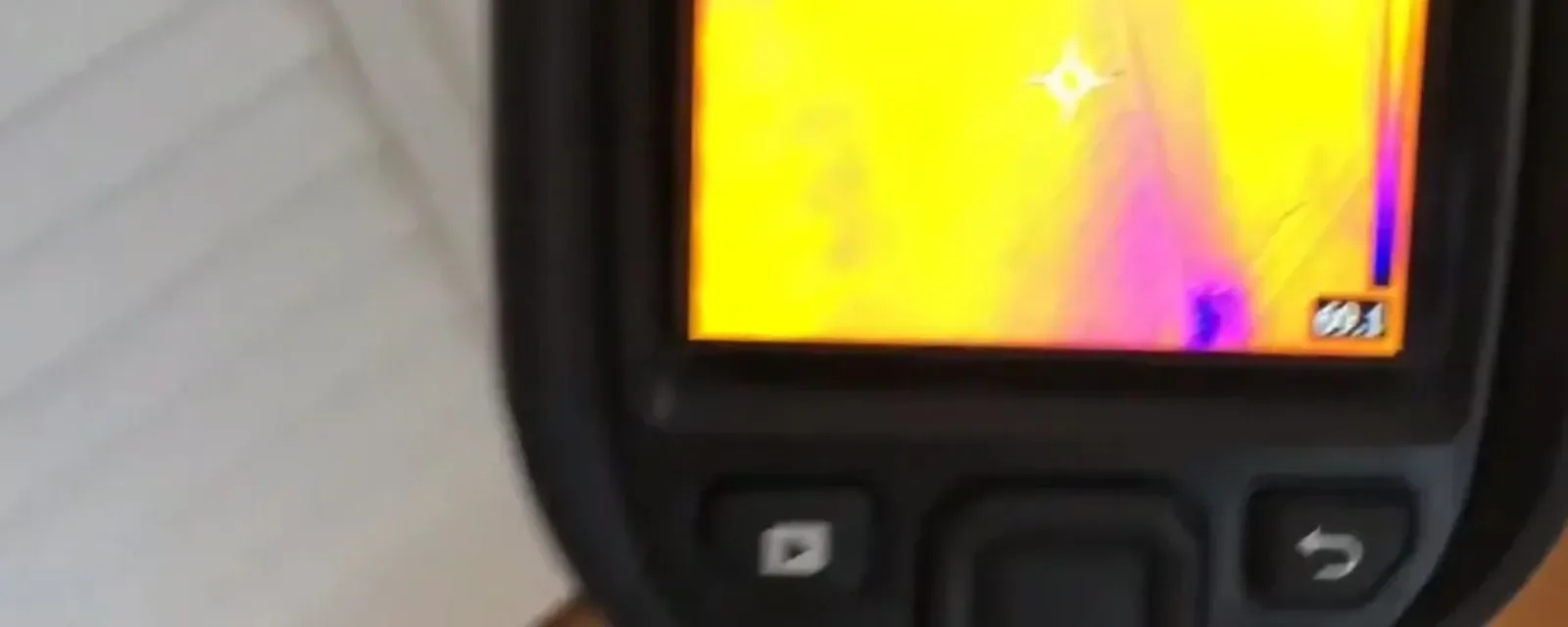
| Thermal imaging | Hot lines and wet insulation behind finishes | Shows temperature, not water. |
| Moisture meter | Confirming damp drywall, subfloor and framing | Reads only where the probe touches. |
| Pressure test | Proving whether one line holds | Line must be shut off and capped. |
| Tracer gas | Stubborn cases where sound fails | Extra setup on emptied lines. |
Sound narrows the search to a few feet. Thermal imaging and a moisture meter confirm the spot, and a pressure test proves whether the line holds before we cut.
Slab leaks: warm floors and a meter that will not rest
Where supply lines run under a concrete floor, a leak announces itself with a warm patch, the faint sound of running water at night, damp carpet edges or a hot water bill that climbs. We isolate hot from cold with a pressure test, then trace the loss with a ground microphone and thermal imaging.
Repair comes in two forms. We can open the slab at the leak and patch the line, or abandon the buried section and reroute it through walls and ceilings. Rerouting avoids a jackhammer but opens finishes overhead. If the pipe is old and has already failed once, repiping may cost less over time than another patch.
Stains on a ceiling or damp walls
Brown ring that keeps growing
Often a supply line or drain above. Check whether the ring spreads even when nobody has used water upstairs.
Stain after showers only
Points to a tub overflow, shower pan or drain joint, because it appears only when that fixture runs.
Stain only after rain
This is a roof or flashing problem, not plumbing. A roofer is the right call.
Bubbling paint and a musty smell
A slow wall leak, usually from a fitting or supply stub that has been seeping for weeks.
Under the house: crawl spaces and basements
Look for wet or sagging insulation, a dripping joint on exposed copper, rust streaks on a cast iron drain or a damp, earthy smell. A flashlight and ten minutes can reveal a lot, but never crawl into standing water near electrical equipment.
Not every wet basement is a plumbing leak. If water arrives after rain through a wall or the floor edge, it is groundwater and the answer is drainage, covered under basement waterproofing. If it appears on dry days, or the meter test failed, a pipe is the likelier cause.
What Neptune's water and older houses do to pipes
New Jersey American Water reports naturally occurring hardness of 72 to 140 ppm in its Coastal North system, and your street may sit anywhere in that range. Scale builds inside older pipes and fittings, which narrows them and can stress joints. When a house has long-running scale, we look for leaks at fittings and valves first.
Ocean Grove's Victorian wood-frame homes, built mainly between the 1870s and 1920s, have been altered many times. Pipe runs may cross floors and walls in odd ways, so thermal imaging and a microphone often save you from opening plaster. The same goes for older stock in Asbury Park, where you should expect mixed pipe materials from several renovations.
Sprinklers, outdoor lines and an honest limit on oil
Irrigation leaks hide well. Run the meter test with the controller off, then run one zone at a time. The zone that makes the meter spin is your suspect. A leaking backflow preventer on the irrigation feed, or a cracked fill line to a pool, shows up the same way.
A strong fuel smell or a rainbow sheen near a basement tank or oil line is not a plumbing leak. We cannot assess or clean up heating oil contamination. Call your fuel supplier and the New Jersey Department of Environmental Protection, and keep ignition sources away.
What drives the cost of leak detection
A meter test and a listening visit cost far less than a slab trace with tracer gas, and the repair is priced separately once we know the location. Here is what moves the number.
Many homeowner policies cover water damage from a sudden leak but not the cost of finding or fixing the pipe itself. Wording varies, so check with your insurer before work and keep the invoice.
Leak Detection questions in Neptune, NJ
Yes. The 24/7 emergency line at (732) 466-1098 is open around the clock, including nights, weekends and holidays. Tell us where the water is coming from and whether you can reach the main shutoff, and we will walk you through it.
While you wait, close the main valve, move belongings off the floor, stay away from wet electrical areas and photograph the damage. We do not promise an arrival time, but we will tell you plainly what happens next.
Something is using or losing water. Check toilets, the ice maker and irrigation first, then close the main valve inside the house. If the meter stops, the leak is indoors. If it keeps turning, the leak is on the buried line between the meter and the valve.
Usually only a small opening, and only after the spot is confirmed by two methods. Acoustic listening, thermal imaging and a moisture meter let us aim the cut. In some cases, such as a failing run inside a wall, a larger access panel is the faster and cleaner fix.
It depends on access, the method needed, pipe material and how many leaks there are. A meter check is a short visit. A slab trace takes longer and uses more equipment. We give a clear price before work starts, so call (732) 466-1098 for your real number.
Permit rules vary, so ask the Neptune Township construction office. The township's 2018 fee schedule lists $27 per fixture or device and a $95 minimum per subcode, and the office can confirm current fees. If piping is opened, a rough plumbing inspection may apply before it is covered. Keep meter readings, photos and the invoice for your insurer.
That depends on your lease and the cause of the leak. Report the problem to your landlord or property manager in writing, close the main valve if water is spreading, and photograph the damage. If the situation is urgent, we can start work and provide an itemized invoice that states where the leak was found.
Related plumbing services
Sources referenced on this page: New Jersey American Water, Coastal North annual water quality report. Neptune Township construction office, 2018 fee schedule (Ordinance 18-25).