
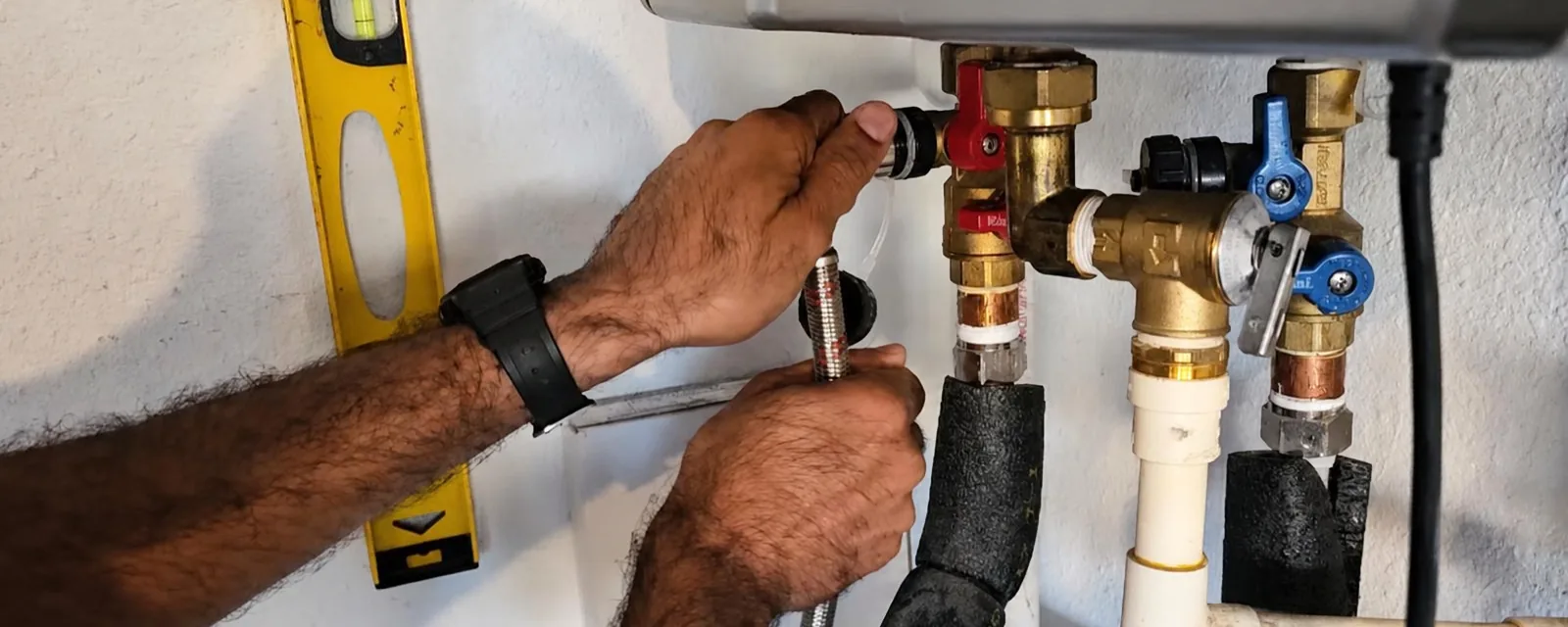
A tankless water heater heats water on demand as it flows through a heat exchanger, so there is no stored tank to run out. The appeal is plain: hot water for as long as the unit can keep up, and a smaller footprint on the wall. The catch is that most homes were built for a tank, and the switch can touch the gas line, the vent and the water quality.
Our licensed plumbers install, service and descale tankless units in Neptune. We start with the building, not the brochure, because a poor fit costs more than a good tank would have.
When tankless is a poor fit
Tankless is not right for every house. A home with a small gas line, a long vent run or very low-flow fixtures may struggle. A household that uses hot water in tiny bursts, such as a quick rinse every few minutes, can trigger the unit's minimum flow limit and cause the water to cycle between hot and cold.
It is also a poor choice where nobody will maintain it. Without regular descaling, a heat exchanger in hard water loses efficiency. If you want the lowest-effort option, a quality tank may suit you better. Our water heater replacement page compares the types.
Condensing or non-condensing: what changes
These two designs look similar on the wall but ask different things of the house.
| Feature | Condensing | Non-condensing |
|---|---|---|
| Exhaust | Cool, can use plastic vent pipe | Hot, needs stainless or special vent. |
| Condensate | Acidic drain water to manage | None to speak of. |
| Efficiency | Extracts more heat from exhaust | Less efficient. |
| Vent upgrade | Often smaller, easier routes | May need a new chimney liner or wall vent. |
| Upfront equipment | Higher | Lower. |
Which type suits you depends on your vent path and condensate drain, so we look at both on site.
Gas line sizing and the BTU load
A tankless unit can pull a large gas load at once, often far more than a tank burner. If the existing line, meter or regulator cannot deliver that volume, the unit starves and cuts out. We calculate the load of all gas appliances and the length of the run before we recommend a model.
If the line is too small, upsizing it is part of the job. Smell gas at any time and you leave the building and call the gas utility or 911 before calling us. For planning a unit in a new spot, see water heater installation.
Installing for the first time?
See how we plan fuel, venting and permits for a new heater location.
Scale and Neptune's 72 to 140 ppm water
New Jersey American Water reports hardness of 72 to 140 ppm in its Coastal North system, which serves Neptune Township and Ocean Grove. That equals about 4 to 8 grains per gallon, and your street may sit anywhere in that moderately hard to hard range.
A tankless heat exchanger has narrow passages, so scale narrows them further and lowers output. The payoff is a maintenance habit: ask for isolation valves at install so descaling takes minutes, and plan a flush on the schedule the manufacturer sets. The same advice applies to homes in Ocean Township and Neptune City, which share the system.
How a descaling flush works
A flush is a closed-loop job done through service ports.
Isolate the unit
We close the isolation valves and shut off power and gas to the heater.
Connect a pump
Hoses and a small pump link the service ports to a bucket of descaling solution.
Circulate
The solution runs through the heat exchanger for the time the maker specifies, dissolving mineral buildup.
Rinse and clean the filter
We flush with clean water and clear the inlet screen of debris.
Restore and test
Valves reopen, the unit fires, and we check flow rate, temperature and error codes.
Quirks to know before you buy
Tankless units behave differently from tanks. None of these is a dealbreaker, but each deserves a straight answer.
Cold-water sandwich
You may feel a cold slug between two hot bursts when the unit shuts down and restarts. Short pauses between uses cause it.
Minimum flow
Very low flow can fail to trigger the burner. Aerators and low-flow showerheads can matter.
Wait time at far fixtures
Hot water must still travel through the pipes. A recirculation loop or point-of-use pump shortens the wait.
Simultaneous demand
Two showers and a dishwasher can exceed one unit's output. Size for your busiest hour.
Power for the fan
Gas units still need electricity for ignition and the fan, so a power outage means no hot water.
Site checks before we quote
These are the items we look at during a visit.
- Gas meter, regulator and pipe size, and the distance to the new location.
- Vent path through wall or roof, and clearance from windows and openings.
- Condensate drain location for condensing models.
- Electrical outlet within reach for the control board and fan.
- Water pressure and flow at the fixtures you use most.
- Space for isolation valves and a service-port flush.
Venting upgrades, permits and inspection
Permit rules vary, so ask the Neptune Township construction office what a tankless install requires. The township's 2018 fee schedule lists $27 per fixture or device, including water heaters up to 99 gallons, and the township lists rough, finish and final plumbing inspections for one and two family dwellings. Confirm current fees with the office.
Venting changes are where jobs surprise people. Moving from a chimney flue to a sidewall vent can mean new penetrations and clearance checks. We flag that during the visit so the price you hear includes it.
What about lifespan?
Manufacturers often cite a longer service life for tankless units than for tanks, but the real number depends on water quality, descaling and load. Neptune's moderately hard water makes maintenance the deciding factor. Treat any claim of a specific lifespan as a best case, and ask what the warranty requires you to do.
What drives the cost of going tankless
Tankless jobs vary widely because the house decides how much supporting work is needed. For tank heater problems, see our page on water heater repair first.
If a failed water heater caused damage, your insurer decides coverage. We can provide an itemized invoice for the repair and the new unit.
Tankless Water Heater questions in Neptune, NJ
It depends on your gas line, vent path and habits. Tankless suits larger households and tight closets, but it asks for regular descaling in hard water. If your gas line and vent are already suitable, the switch is easier.
We check those items on site before you decide.
Follow the manufacturer's schedule, which usually points to yearly service in hard water areas. Neptune's water falls in the 72 to 140 ppm range reported by New Jersey American Water, so many homes see scale. Isolation valves make the flush quick.
That is the cold-water sandwich. The unit shuts down between uses and the water in the line cools before it restarts. A short pause between uses, a buffer tank or a recirculation setup can reduce it.
It can cut standby heat loss, but the upfront work often costs more than a tank swap. Savings depend on use, fuel and maintenance. We explain cost drivers and give a clear price before work starts so you can compare.
Permit rules vary, so ask the Neptune Township construction office. The 2018 fee schedule lists $27 per device for water heaters up to 99 gallons. Confirm current fees with the office, and expect inspections to be requested at least 24 hours ahead.
Most gas tankless units need electricity for ignition and the exhaust fan, so they stop. A tank heater with a standing pilot can still make some hot water. If outages worry you, ask about battery backup options.
It can free closet space and remove the risk of a leaking tank, but tenants who skip maintenance may shorten the unit's life. Plan a service schedule and keep records. We can coordinate scheduling with your property manager or tenants.
Related plumbing services
Sources referenced on this page: New Jersey American Water, Coastal North annual water quality report. Neptune Township construction office, 2018 fee schedule (Ordinance 18-25).