
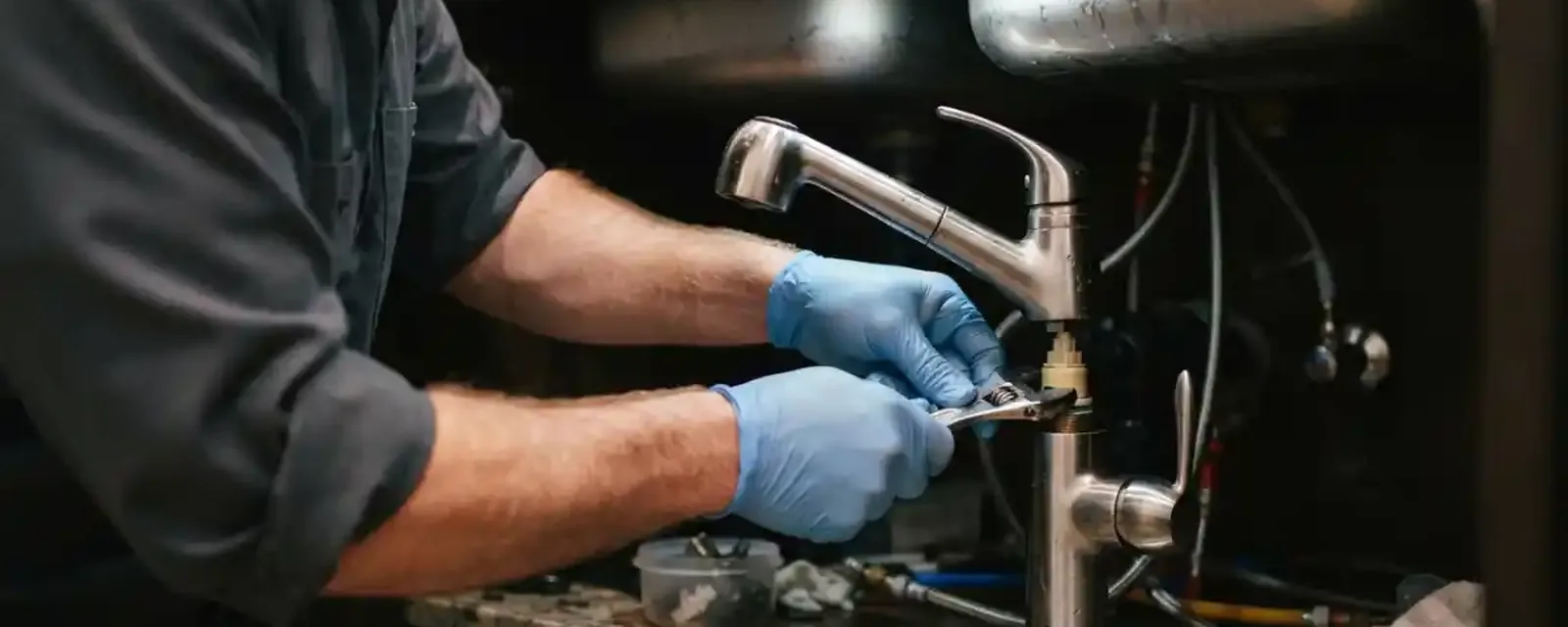
When the shower is on but water keeps pouring from the tub spout, the diverter is not closing. A diverter is a small valve that sends water either to the spout or up to the showerhead. When its seal wears, its cartridge sticks, or its pull-up knob loses its grip, the water takes the easy path and the shower barely sprays.
Most diverter faults are repairable without changing the whole valve. This guide shows the three common designs, how to tell which one you have, what a safe DIY fix looks like and when the real trouble sits inside the wall.
What a diverter actually does
Hot and cold water mix in the main shower valve. That mixed water then reaches the diverter, which has two exits. One exit feeds the tub spout, and the other feeds the shower riser pipe behind the wall. Lifting a knob or turning a handle closes the spout exit and opens the riser.
Because the seal is a small rubber or plastic part, it wears out long before the valve does. Water keeps taking the spout exit when the seal no longer closes it fully.
Three diverter designs and how each fails
Look at your fixture to find which type you have, since each fails in its own way.
| Type | How it works | Typical failure | Repair path |
|---|---|---|---|
| Tub spout with pull-up knob | Lifting the knob blocks the spout | Worn gasket in the spout, loose knob | Replace the spout, usually a DIY job. |
| Two-handle with middle diverter | A third handle between hot and cold | Stem seal worn, handle spins | Replace the stem or cartridge. |
| Single-lever with built-in diverter | A cartridge handles both mix and diversion | Cartridge scaled or cracked | Replace the cartridge. |
| Three-valve tub-shower | Separate diverter valve in the wall | Stuck stem, leaking packing | Plumber, may need wall access. |
| Thermostatic with a diverter | Controls temperature and spray separately | Internal part fails | Plumber, replace the module. |
If the tub spout uses a slip-on or threaded diverter, the fix is often a new spout that costs little. Cartridge and wall-valve repairs cost more because of labor and access.
A safe order to troubleshoot a diverter
Work in this order. It moves from the cheapest check to the most invasive.
Check the spout type
Look under the spout for a small set screw, or feel for a threaded connection. That tells you how it comes off.
Test the knob
Lift the pull-up knob with the water on. If it will not stay up, or water leaks around it, the diverter gate in the spout is worn.
Swap the spout
Turn off the shower, remove the spout with an Allen key or by unscrewing it, and fit an identical one. This fixes most cases of a leaking pull-up diverter.
Shut off the water
If the diverter is a stem or cartridge inside the wall valve, close the fixture stops or the house main before opening the handle.
Pull and inspect
Remove the handle and trim, then the cartridge or stem. Look for scale, cracks or a flattened rubber seal.
Replace like with like
Match the brand and model exactly. A near fit seals poorly and leaks inside the wall, where you will not see it.
Do not force a stuck cartridge
A cartridge that will not budge is usually locked by mineral scale. Prying with pliers can crack the valve body, which is brazed or glued into the wall plumbing. If gentle wiggling and a vinegar soak do not free it, stop and call a plumber.
What the symptom usually means
Different signs point to different parts.
Water at the spout and a weak shower
The diverter gate is not sealing. Replace the spout or cartridge.
Shower works, then reverts
A spring or knob catch is worn. The shower drops back to the spout after a minute.
Handle spins freely
The stem or its splined connection is stripped. Replace the stem.
Drip from the showerhead after use
Water bypasses the seal, or the cartridge is leaking. Check the cartridge first.
Damp wall or ceiling below
Leaking inside the wall. Turn off the water and call a plumber.
When the wall valve or pipes are the issue
A diverter that fails again soon after a repair may point to the pipes behind it. Corroded supply lines, scaled valve bodies and shower risers that have lost their rigidity can all cause repeat failures. A plumber can open the access panel, test pressure and see whether the valve or the pipes are at fault.
If the shower valve body is cracked or the supply lines are corroded, a faucet and valve repair may not be enough. Sometimes a section of repiping is the lasting fix, especially when several fixtures have the same symptoms.
Before you call a plumber
Gather these details so the visit goes quickly.
- Note the brand on the handle or trim plate, if any.
- Take a photo of the spout and handle from the front.
- Check whether the tub and shower share one handle or have separate ones.
- Write down when the problem began, and whether it got worse suddenly.
- Look for stains on the wall or ceiling near the shower.
- Know where your fixture stops and house main shutoff are.
What Neptune homeowners should know
New Jersey American Water's Coastal North report lists hardness between 72 and 140 ppm as calcium carbonate, which is roughly 4 to 8 grains per gallon. Your street may sit anywhere in that range. At the harder end, scale builds on diverter seals and cartridge ports over time, so a vinegar soak of the removed part is a reasonable first cleaning step.
The plumbing code in New Jersey is the National Standard Plumbing Code, and it defines hot water as 120 to 140 degrees F. If you change a shower valve, ask your plumber to set the water heater and any mixing valve in that range so the new valve does not deliver scalding water.
If you live across the line in Ocean Township, our plumbing service in Ocean Township page shows the coverage. Neptune City owners can find the borough's details on our Neptune City plumbing page. Permit rules vary, so ask the Neptune Township construction office if the repair opens a wall.
Source type: NJ American Water Coastal North 2025 water quality report and NJ plumbing subcode (NSPC)
Questions about this topic
The diverter is only partly closed. A worn seal or loose gate lets some water slip through the spout. Replacing the spout or the cartridge usually fixes it.
Yes, if it is a slip-on or threaded spout. Turn the water off, remove the old one, and fit the new one with the same connection type.
Remove the handle and trim. A cartridge is a plastic or brass cylinder held by a clip, and a stem is a threaded shaft. A photo of what you see helps a plumber identify it.
Scale can stick moving parts and wear seals, especially toward the harder end of the 72 to 140 ppm range the water report lists. A periodic soak and a clean-out can delay replacement.
A drip at the spout is not. A wet wall or ceiling under the bathroom is, so shut off the water and call. For electrical concerns near the bathroom, stay out of standing water and do not touch panels.