
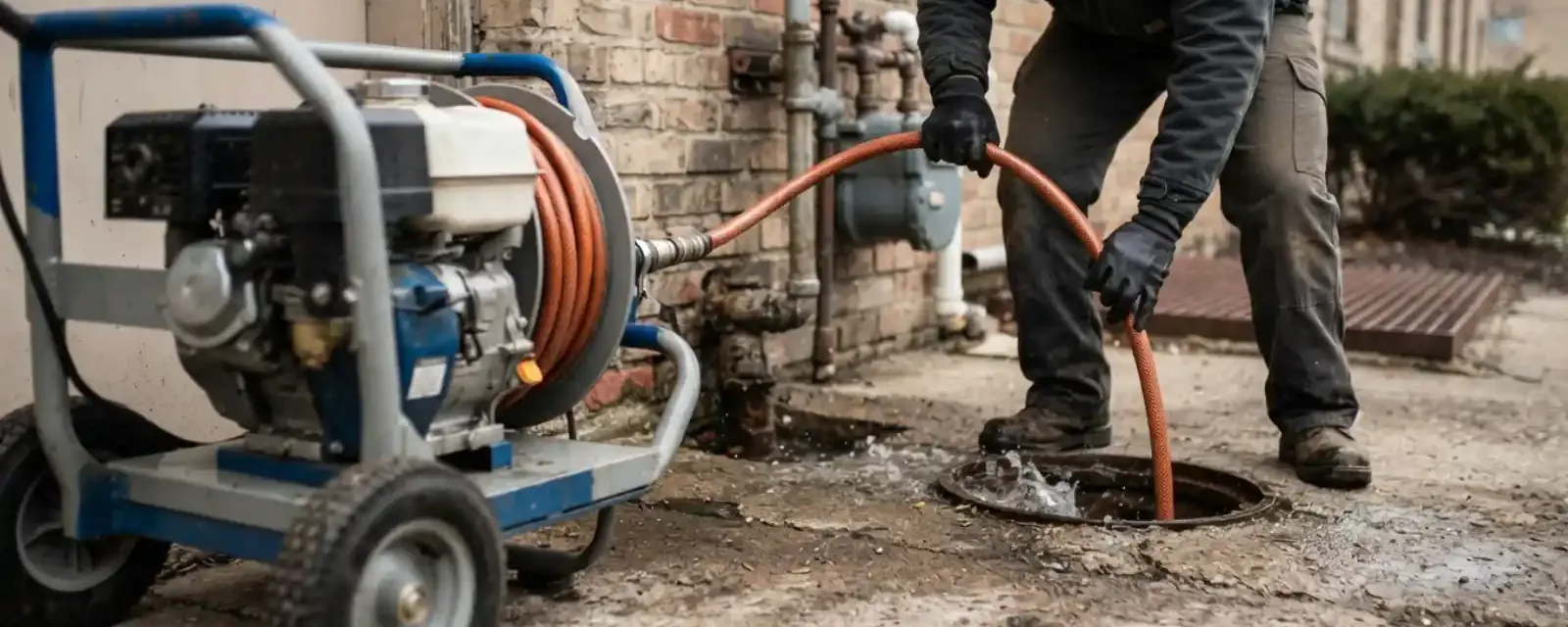
Hydro jetting clears a sewer line by firing high-pressure water from a nozzle inside the pipe. The water scours grease, scale, sludge and loose roots off the pipe wall and flushes them downstream. A cable machine, by contrast, pokes a hole through a blockage and leaves the rest of the buildup behind.
For a main line that backs up again every few months, jetting is often the better tool, but only if the pipe can take it. A camera look comes first, because a cracked or collapsed section will not be fixed by water. This guide covers how the job works, what separates it from other methods, and what to check before you book it.
What happens inside the pipe
A jetting hose runs from a truck or trailer-mounted pump into your sewer cleanout. The hose ends in a nozzle with several small jets, most pointing backward. Those rear jets pull the hose forward through the line and blast the wall as it goes.
On the way back out, the tech slows down and works the worst stretches again. The debris washes toward the municipal main or septic system, not into your house. Residential jetters run at pressures in the thousands of psi, and the right setting depends on pipe material and condition.
Jetting, cabling and chemicals compared
Each method fits a different problem. This table shows the trade-offs in plain terms.
| Method | Best for | Limits | Risk to old pipe |
|---|---|---|---|
| Hydro jetting | Grease, scale, sludge, fine roots on the pipe wall | Cannot repair a crack, sag or collapse | Moderate if the pipe is already thin or broken. |
| Cable machine | A single hard blockage such as a clump of roots or a toy | Leaves residue, so clogs tend to return | Low to moderate, the blade can scrape. |
| Camera inspection | Finding the cause and locating it by footage | Finds problems but does not clear them | None. |
| Store-bought chemicals | Light slow drains in a sink | Poor on a main line, can sit in the pipe | Can harm some old fittings. |
Many jobs combine two steps. The plumber cables a stoppage open, runs a camera, then jets if the footage shows heavy buildup.
How a jetting visit usually runs
The order matters more than the machine. Skipping the first two steps is how a pipe gets damaged.
Locate the cleanout
The plumber finds the access point, often a capped fitting in the basement, crawl space or yard near the foundation.
Run a camera first
A small camera on a flexible rod shows pipe material, joints, sags and any break. The footage decides whether jetting is safe.
Set pressure and nozzle
A gentle nozzle suits clay or cast iron with scale. A cutting nozzle is for roots and is used with care.
Jet in passes
The hose goes in until it meets resistance, then the tech works forward and back until water runs clean.
Confirm with a second look
A final camera pass or a flow test shows the wall is clear and the line drains freely.
Signs a main line may need more than a cable
One slow sink is not a sewer problem. Several of these together point to the main line.
Gurgling in other drains
Flush a toilet and hear a bubbling shower drain. Air is being pushed back through the line.
Backups in the lowest fixture
A basement floor drain or tub is usually the first to show a blocked main.
Repeat clogs
If a cable opened it and the same stoppage returned within a season, buildup is likely lining the pipe.
Several fixtures slow at once
Slow drains on every floor suggest the shared line, not a trap under one sink.
Sewer odor outdoors
A smell near the cleanout or yard can mean standing waste in a sagging section.
When jetting is the wrong call
Jetting will not fix a broken, offset or collapsed pipe, and it can make a weak pipe worse. If the camera shows a crushed section, an open joint or a belly full of standing water, the answer is repair, not more cleaning. For those cases, see sewer line cleaning first to open the line safely, then decide on repair with real footage in hand.
What to do before the plumber arrives
A few minutes of prep makes the job faster and safer.
- Stop running water. Skip showers, laundry and the dishwasher until the line is clear.
- Clear a path to the cleanout, including stored boxes in the basement.
- Note which fixtures back up and in what order.
- Take a photo of any water that has come up through a floor drain, in case you file an insurance claim.
- Keep children and pets away from the affected floor.
- Skip chemical drain openers, since they can splash on the tech and hide what the camera sees.
How to keep the line clear afterward
Jetting resets the pipe, but habits decide how long it stays clean. Keep grease out of the kitchen drain, wipe pans with a paper towel and throw cooking fat in the trash. Flushable-labeled wipes do not break down like toilet paper, so bin them.
Roots are the other repeat offender. If the camera found roots entering at a joint, expect them to return, and ask about a repeat jetting schedule. The service pages on hydro jetting in Neptune explain how that works in practice.
What Neptune homeowners should know
Neptune Township has a Sewer Maintenance Department, and Ocean Grove has its own Ocean Grove Sewerage Authority with an office on Corlies Avenue. Which body handles your street decides who to ask about the public main. Your plumber handles the private lateral from the house to the main.
The township says to call the police department for after-hours sewer emergencies. That is useful to know before a backup at night, because a blockage in the public main is not something jetting your own line will fix.
Ocean Grove is a National Register historic district with Victorian wood-frame homes from the 1870s to the 1920s. Older homes there may have older lateral pipe, so a camera look before any jetting is a sensible step. Neighboring towns differ on who runs the sewer. In Neptune City ask the borough, and in Asbury Park ask the city.
Source type: Neptune Township website and NPS National Register record for Ocean Grove
Questions about this topic
It can be, when a camera confirms the pipe is intact and the pressure is set for the material. Scale in cast iron often cleans up well. Clay with cracked joints or heavy root intrusion is more at risk, so the plumber picks a lower setting or recommends repair.
Most single-family lines take a few hours including the camera pass. Heavy buildup, a long run or difficult access to the cleanout adds time. Call for your real number and schedule.
It removes buildup on the pipe wall, which a cable cannot do. It does not stop new grease, wipes or roots. Habits and a periodic camera check are what keep it clear.
Ocean Grove has its own sewerage authority. Ask it about the public main, or follow the township's after-hours guidance to call the police department for a sewer emergency. If the problem is the pipe between your house and the main, a plumber handles that.
Cleaning a line is normally not new construction, but permit rules vary, so ask the Neptune Township construction office. Repairs or replacement of the sewer pipe are a different question and may need a permit and inspections.