
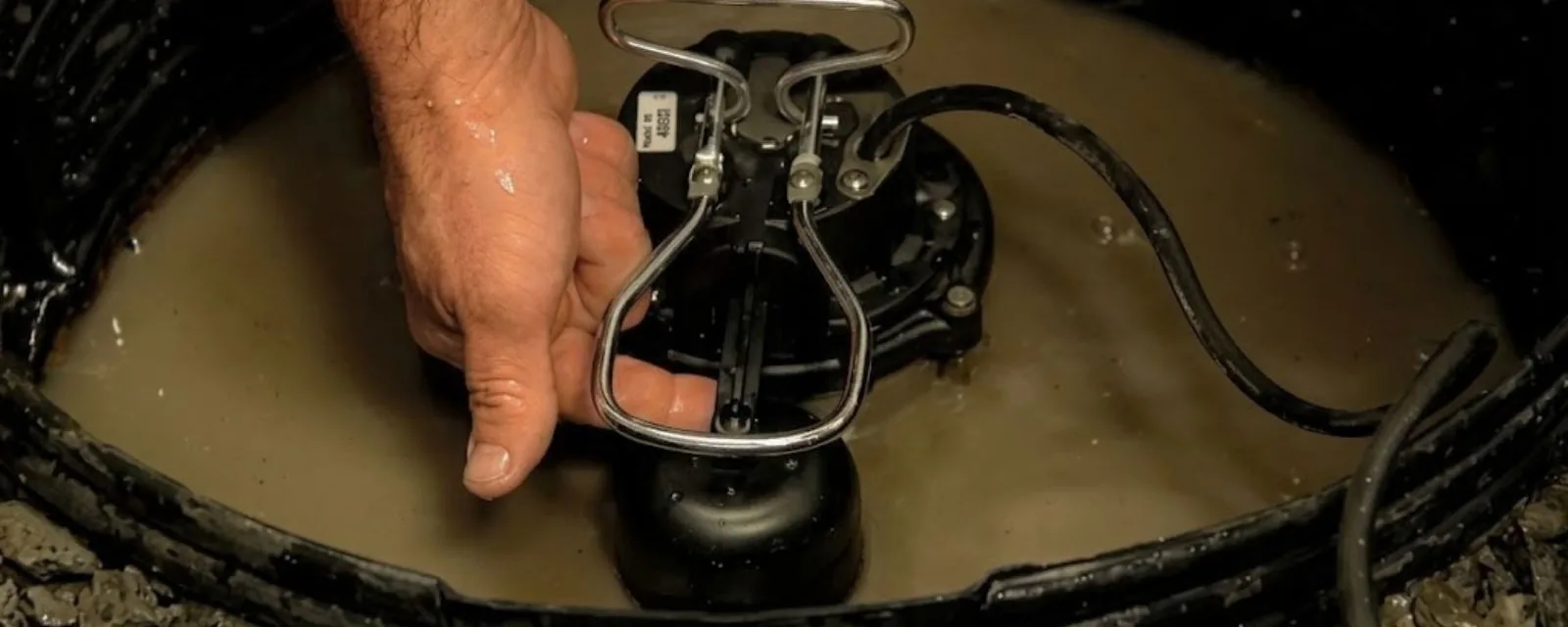
The cost of installing a sump pump depends on five things: whether a pit already exists, the type and power of the pump, the discharge route, any backup system and whether the work needs a permit. A pump swap in an existing pit is a short job. Cutting a new pit through the slab and running a new discharge line is a larger one.
We do not print dollar figures here because the range between those jobs is wide, and a number without a site visit would mislead you. What follows lets you read a quote line by line, so you can see what each bid includes and what it leaves out.
The five cost drivers
Every quote is built from these pieces.
Pit status
Existing pit with a liner is cheapest. A new pit means cutting concrete, digging, setting a basin and patching the slab.
Pump type
Submersible pumps sit in the pit and run quietly. Pedestal pumps sit above and cost less but are louder and shorter lived.
Horsepower and head
A bigger lift or longer run needs a stronger pump. Oversizing short-cycles the motor.
Discharge route
A short run through the rim joist is simple. A long run, a buried line or a tie-in adds labor.
Backup and alarms
Battery backups, water-powered backups and high-water alarms add equipment and setup time.
Pump types compared
The right pump depends on how often water arrives and how long the power may be out.
| Type | Best for | Trade-off | Power |
|---|---|---|---|
| Submersible | Most finished or damp basements | Harder to reach for service | Household circuit. |
| Pedestal | Shallow pits and tight budgets | Louder, shorter life | Household circuit. |
| Battery backup | Outages during storms | Battery needs testing and replacement | 12 volt battery. |
| Water-powered backup | No power, no battery | Needs municipal water pressure and a certain flow | Water pressure. |
| Dual pump system | Heavy inflow, high risk | More parts and more cost | Two circuits. |
A water-powered backup uses water from the municipal supply, so it should only be installed with a backflow preventer and compliance with local rules.
Pit liners, lids and odors
A sealed lid keeps humidity and odors out of the basement and keeps small items from falling into the pit. Lids with a gasket are better than loose plywood. If the sealed pit is meant to vent, ask how the installer handles that so the lid does not trap pressure.
A damp, musty smell around the pit often comes from stagnant water or a dry trap in a nearby floor drain, not from the pump. Cleaning the pit and refilling any dry floor drain trap usually clears it.
What happens during a new installation
Knowing the sequence helps you see what each line of a quote represents.
Site visit and sizing
The plumber checks the basement, the water source, the likely inflow and where the discharge can exit.
Pit placement
The pit goes at the lowest point, away from footings, drains or utilities, and the slab is cut to size.
Set the basin and pump
A gravel base, a basin with a lid, and a check valve on the discharge line, all set level.
Run the discharge
Pipe runs out through the wall or rim joist to a point that drains away from the foundation.
Wire and test
The pump goes on a dedicated, protected outlet. The installer fills the pit and checks float action and flow.
Electricity and sump pumps
A sump pump is an electrical appliance sitting in water. Stay away from wet electrical areas, and never touch the panel while standing in water. If your basement is flooding and the panel is at risk, leave the area and ask the utility or an electrician to shut power from outside.
Where the discharge goes matters more than you think
A pump that sends water to the base of your own foundation, onto a neighbor or into the sanitary sewer creates new problems. Discharge should reach a spot that drains away from the house, through a pipe with a check valve to stop backflow into the pit. Frozen outlets in winter are a known cause of pump failure, so ask how yours is protected.
Ask the Neptune Township construction office what is allowed in your area before you choose a route. Where water is stubborn, basement waterproofing works with a pump rather than replacing it, since a drain system needs somewhere to send the water it collects.
Testing and maintaining a pump after install
A pump that sits idle through a dry spell can seize, and the first storm is the wrong time to find out. Pour a bucket of water into the pit every few months. The float should lift, the pump should start and the pit should empty without a rattle or a long hum.
Check the discharge outlet for leaves, ice and animal nests. Clean grit from the pit and look at the check valve for a clack as it closes. If the pump cycles every few seconds after it shuts off, water is flowing back into the pit and the valve needs replacing.
How to compare sump pump quotes
Quotes that look the same on paper often differ in what they leave out.
- Does the quote say whether it is a new pit or a swap in the existing one?
- Is the pump brand, horsepower and check valve listed?
- Is the discharge line length and route described?
- Is a battery or water-powered backup included or priced separately?
- Does the quote include slab patching and debris removal?
- Is a permit included, and who pulls it?
A clear price before work starts should list these items. If a bid cannot, ask for a revised version.
What Neptune homeowners should know
The state recovery report says the township was without power for fourteen days after Superstorm Sandy. A pump on household power only fails exactly when a storm hits, so a battery or water-powered backup is a real consideration here, not an upsell. Ask any installer how long the battery will run and how you will know if it fails.
Neptune Township's 2018 fee schedule lists $27 per plumbing fixture or device. Whether a sump pump counts, or needs a permit at all, is a question for the construction office, since permit rules vary. Confirm current fees with them before you plan the work. If you are replacing a pump in an existing pit, our sump pump page explains what a swap includes.
Neptune City and Ocean Township homeowners can check our Neptune City plumbing page and plumbing service in Ocean Township for coverage. The township also notes that large residential areas, including all of North Island, are in flood zones, so a pump there is one layer of protection, not a full answer.
Source type: NJ DCA Strategic Recovery Planning Report (2014) and Neptune Township fee schedule (Ordinance 18-25)
Questions about this topic
Life depends on use and quality. A pump that runs often wears faster, so test it each season by pouring water into the pit and watching it switch on and off.
A generator helps only if it is running and wired to the pump. Many homeowners prefer a battery backup because it starts without anyone present.
Do not tie it into the sanitary sewer unless the local authority approves. Rules vary, so ask the Neptune Township construction office.
A high groundwater table, a failing check valve or a discharge that returns water near the house can all keep it running. A plumber can check the pit, valve and outlet.
Only when water is rising from below. If water seeps through the wall, add drainage or exterior treatment.