
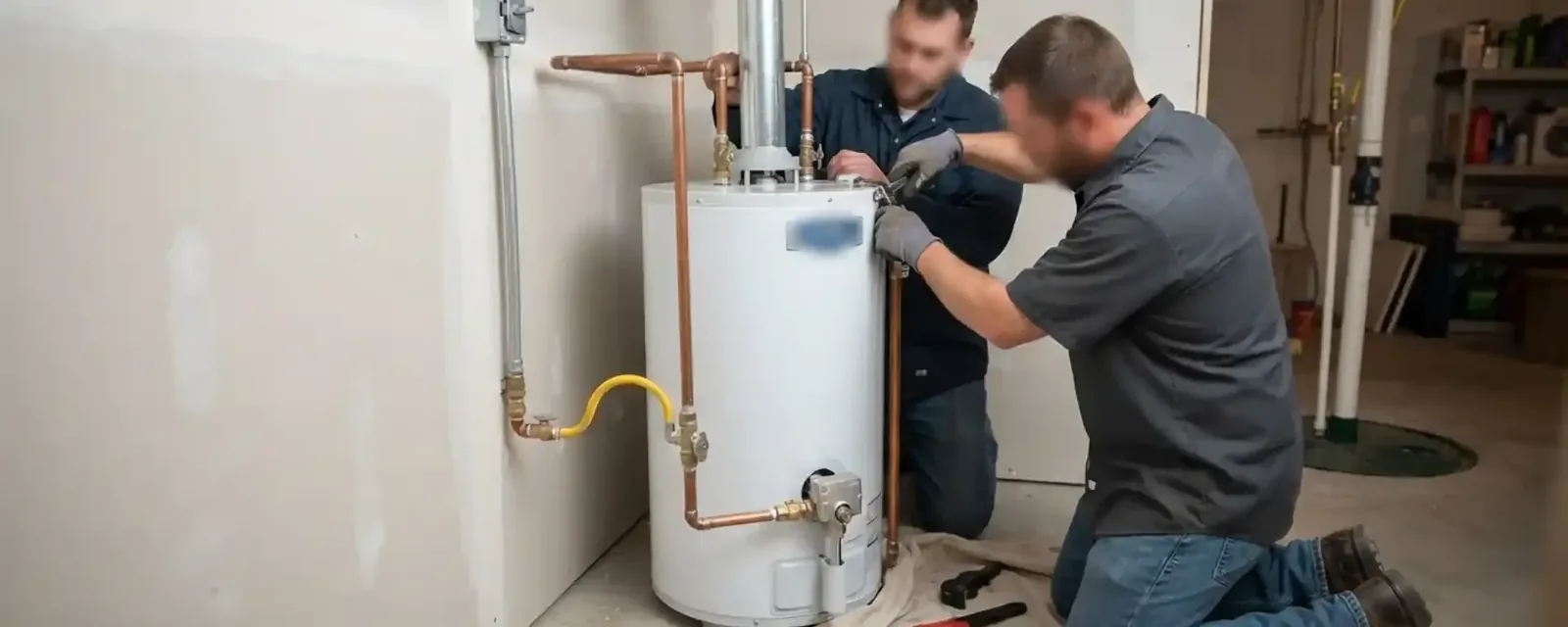
The price of installing a 50-gallon water heater depends less on the tank than on what surrounds it. Fuel type, venting, gas or electrical work, code-required parts and the permit all add or remove cost. A like-for-like swap in an easy spot sits at the low end. A fuel change or a rerouted vent sits much higher.
This guide gives no dollar figures for the work, since each house differs. It does show what each quote line should contain, which township permit fees apply, and how to compare two bids so you pay for the same job. Call for your real number once someone has seen the setup.
Install scenarios and what changes the price
Most 50-gallon installs fall into one of these cases.
| Scenario | Extra work involved | Disruption | Cost effect |
|---|---|---|---|
| Like-for-like electric swap | Disconnect, set, connect, test | Light, about half a day | Lowest. |
| Like-for-like gas swap | Gas connection, flue, combustion check | Moderate | Low to moderate. |
| Gas to electric conversion | New 240-volt circuit, remove flue | Moderate, needs electrical work | Higher. |
| Move to a new location | New water lines, drain, venting | Heavy, may need walls opened | High. |
| Upgrade to power vent or direct vent | New vent run through wall or roof | Moderate to heavy | Higher. |
| Add expansion tank and pan | Plus a drain for the pan | Light | Small add-on. |
Five line items every quote should list
If a bid lumps these together, ask for the breakdown.
Water heater replacement is not usually covered by home insurance unless a sudden failure caused water damage. Ask your insurer before you rely on coverage.
The heater itself
Brand, efficiency rating, warranty length and whether it is gas or electric.
Labor and access
A basement install with room to work differs from a closet or attic.
Venting and fuel connections
Gas piping, a flue or a direct vent, or an electrical circuit upgrade.
Code items
Expansion tank, temperature and pressure relief discharge pipe, shutoff valves, pan and mixing valve where needed.
Permit and haul-away
The township permit fee, inspection scheduling and removal of the old tank.
Why 50 gallons is the usual size
A 50-gallon tank fits a family of three to five in many homes, though the right size depends on your peak use. Look at how many showers and appliances run in the same hour. Bigger families may want 65 gallons or a tankless unit, and smaller households may be fine with 40.
First hour rating, shown on the yellow energy label, matters more than raw tank size. It tells you how much hot water the unit delivers in the first hour of heavy use. Compare that number when two quotes name different models.
Venting is where bids drift apart
Atmospheric gas heaters use a draft hood and a metal flue to carry exhaust up and out. Power vent and direct vent models use a fan and plastic pipe through a side wall, which is easier to route but needs an electrical outlet nearby. Switching from one style to another changes the scope of the job and the bid.
Ask the installer to check the existing flue for corrosion, proper slope and a sound connection. A bad flue can spill exhaust into the house, so it is a safety fix and not an optional extra. If a quote skips the vent entirely, ask why before you accept it.
Electric tanks avoid venting but still need the right breaker, wire size and a tight connection at the terminals. A loose lug can overheat, so a careful installer checks every connection and does not just reuse the old ones.
Questions to ask every installer
These keep bids comparable and weed out surprises.
- Are you a licensed plumber, and what is your licence status in the state database?
- Does the quote include the permit and the inspection request?
- What is the model, first hour rating and warranty on the tank and on labor?
- Will you install a new expansion tank, relief valve discharge pipe and shutoff valves?
- What happens to the old heater, and is haul-away included?
- If the vent or gas line needs changes, what will that add?
- Can I see the total price in writing before work starts?
Code parts that belong on a good quote
A temperature and pressure relief valve needs a discharge pipe that runs to a safe spot, such as a floor drain or outdoors. Many homes also need an expansion tank, because a closed water system has nowhere for heated water to expand. Without one, pressure spikes can wear out valves and make the relief valve drip.
A mixing valve at the heater outlet lets you store water hot and deliver it at a safer temperature to the taps. A drain pan under the tank limits damage if it ever leaks, especially in finished spaces. These parts add cost, but each one solves a specific problem.
Gas and flooding safety
If you smell gas near the old heater, leave the building and call the gas utility or 911 first, and call a plumber after. If the heater is in a flooded basement, stay out of the water and do not touch the panel. Wait for a professional to cut power safely.
What the install day looks like
The plumber shuts off water and fuel, drains the old tank and disconnects it. The new unit is set on a pan or stand, connected, vented and filled. Air is bled from the lines before power or burner is turned on.
A new tank should never fire dry, so the tech opens a hot tap until water runs steady first. If your plan involves a different size or fuel, water heater installation in Neptune covers what the planning visit includes. For a failed tank, water heater replacement shows how the swap compares.
What Neptune homeowners should know
The Neptune Township 2018 fee schedule lists $27 per plumbing fixture or device, including water heaters up to 99 gallons, and $65 for a water heater of 100 gallons and up. A 50-gallon tank falls in the first line. The same schedule lists a $95 minimum per subcode, so ask the office what a single water heater permit comes to. Confirm current fees, since the schedule dates from 2018.
Permit rules vary, so ask the Neptune Township construction office at 25 Neptune Boulevard whether your swap needs a permit. For one and two family homes, the township lists rough, finish and final plumbing inspections. Requests need at least 24 hours of notice, and the township says it carries out inspections within three business days of the requested time. Plan the install day around that window.
The state plumbing subcode is the National Standard Plumbing Code, 2021 NJ edition, and it defines hot water as 120 to 140 degrees F. If you live in Asbury Park or Ocean Township, ask your own municipal office about its permit process, since each runs its own.
Source type: Neptune Township 2018 fee schedule (Ordinance 18-25) and Neptune Township construction office and NJ plumbing subcode (NSPC)
Questions about this topic
The township's 2018 fee schedule lists $27 per fixture or device including water heaters up to 99 gallons, and $65 for 100 gallons and up. A 50-gallon tank sits in the lower tier. Confirm current fees and the $95 minimum per subcode with the construction office.
Usually the licensed plumber handles it. Ask who is responsible before you sign, and get the permit and inspection steps on the quote.
The township asks for at least 24 hours of notice and says it performs inspections within three business days of the requested time. Your plumber can tell you how this affects the schedule.
Yes, but it needs a suitable 240-volt circuit, a panel with room and removal of the flue. That raises the work compared with a like-for-like swap. Ask for both options priced side by side.
No. A landlord or property manager is normally responsible for hot water, and permit and licensing rules apply to the work. Report the failure in writing and take photos.