
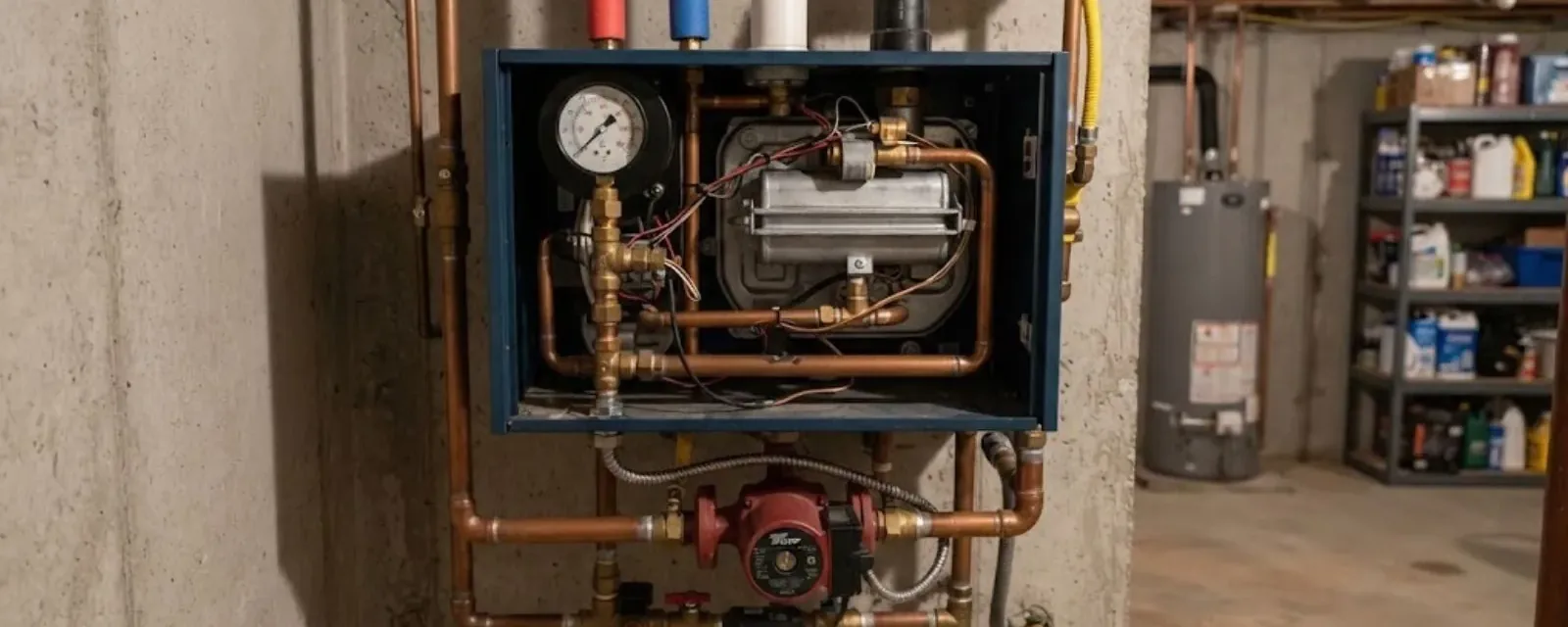
If you smell fuel oil or see a stain around your tank, treat it as a hazard first. Keep flames, sparks and cigarettes away, open windows if it is safe to do so, and stay out of any area with strong fumes. A leaking oil tank or supply line is a heating contractor and fuel supplier matter, and sometimes a state environmental one. It is not a normal plumbing leak.
A plumber still has a role. Plumbers find and fix water leaks that look like oil leaks, deal with water entering a basement near the tank, and repair boiler water-side problems. This guide sorts the signs, explains who to call, and says plainly what it cannot cover, which includes cleanup of spilled oil and burner repair.
Safe first steps while you sort out who to call
These steps reduce risk. They do not fix the leak.
- Do not light matches, use a lighter or flip switches near a strong fuel smell.
- If fumes are strong, leave the building and call 911.
- If you can reach the burner switch safely and it is dry, turn the heating system off.
- Do not wash spilled oil down a floor drain, sink or storm drain.
- Keep children and pets out of the area.
- Take photos of stains, the tank and its gauge for your fuel supplier and your insurer.
- Shut the tank's supply valve only if you can reach it without stepping in oil or water.
What you might be seeing and who handles it
Many fluids look alike in a basement. This table sorts out the likely source.
| Sign | Likely source | Who usually handles it |
|---|---|---|
| Fuel smell near the tank or burner | Loose fitting, filter or tank seep | Oil heat service company. |
| Drips along a copper line from tank to burner | Failed flare fitting or kinked line | Oil heat service company. |
| Dark stain under the tank | Tank wall seep or condensation | Fuel supplier, then state environmental agency if oil reached soil. |
| Clear water on the floor near the boiler | Boiler, pipe or relief valve leak | Plumber or boiler technician. |
| Sheen on standing water in a flooded basement | Oil released by the flood | 911 if strong fumes, then fuel supplier. |
| Wet spot with no oil smell | Water pipe leak or condensation | Plumber. |
Where a plumber helps and where one does not
A plumber can test whether a wet spot is water by checking for a smell and a color, tracing pipes, and using a pressure test or moisture meter if a hidden water line is suspected. If the leak turns out to be a heating pipe or a failed relief valve, leak detection is the right service.
The oil burner, the tank, the fuel line and the filter belong to an oil heat contractor. A plumber should not guess at these. Oil cleanup is not plumbing at all. Dye tests used to trace fuel lines are done by fuel specialists, never by dumping dye into a drain.
What to do over the next day
After the first steps above, work through these in order.
Call your oil supplier or heating company
Tell them what you see and smell. They know how to inspect the tank, filter and lines safely.
Ask about the state environmental agency
If oil has reached soil, a drain or water, the state agency has reporting rules. Your supplier or the agency can explain them.
Notify your insurer
Some policies cover leaks and cleanup, others exclude them. Ask before any cleanup starts, and keep your photos.
Separate it from water problems
If boiler water is also leaking, have the water side checked after the oil issue is under control.
Landlords and tenants
Tenants should report in writing right away. Landlords usually arrange the tank inspection.
Why basement and buried tanks leak
Steel tanks corrode from the outside in, especially where condensation or groundwater sits against the metal. A pinhole can weep for a long time before anyone smells it. Supply lines run at floor level and can rust, kink or loosen at the fittings, and a filter housing can seep at its gasket.
Tanks that sit in damp basements need a regular look at the legs, the gauge and the fill and vent pipes. If the oil level drops faster than usage explains, that is a warning sign worth a call to your supplier. A buried tank cannot be checked by eye, so records of past inspections and fills help the contractor.
What this page will not tell you
There are no cleanup instructions here, because oil spills carry legal and environmental duties that need the right professionals. Repairing a burner or oil line is outside plumbing work. For the water-side of a heating system, see boiler repair.
Water problems that get mistaken for oil
Before you assume the worst, rule out these lookalikes.
Condensation on the tank
A cold tank in a humid basement gets wet on the outside. It is water, not oil.
Boiler relief valve discharge
A dripping relief valve leaves water near the boiler.
Rust staining
Orange rust marks on the floor look dark but have no fuel smell.
Sump or groundwater seep
Water entering at the slab joint can carry old stains with it.
What Neptune homeowners should know
The state recovery report names Shark River Hills, Ocean Grove and North Island as the most flood-susceptible parts of Neptune Township, and says all of North Island sits in flood zones. In a flooded basement, water can shift a tank or lift sheen into standing water. After any flood, have the tank, lines and burner checked before restarting the heat.
Superstorm Sandy surge isolated parts of those neighborhoods from emergency services in 2012. If you live in a flood-prone area, keep your supplier's number written down and know where the burner shutoff is before the next storm.
Neighboring towns share the same issue after heavy rain. If you are in Ocean Township or Neptune City, the same steps apply, and the local construction office can answer permit questions about moving or replacing a tank.
Source type: NJ DCA Strategic Recovery Planning Report (Sandy)
Questions about this topic
A strong smell is. Leave and call 911. A faint smell near the burner still deserves a same-day call to your oil company, with no flame or sparks nearby.
No. Tanks and fuel lines belong to oil heat specialists. A plumber can help if the leak turns out to be water, or with the boiler's water-side pipes.
Dye tracing is for fuel lines and is done by specialists. Do not pour dye or fuel down a drain. Photos and a careful description help the contractor more.
Yes. Floodwater can shift a tank, loosen fittings and carry oil into the water. Stay out of standing water near electrical equipment, and have the tank and lines inspected before the heat comes back on.
Call 911 if there is a strong smell or visible sheen on public water, then your fuel supplier. The state environmental agency handles reporting. Do not hose the oil down the drain.